As the sun rises over the sprawling slum of Mtandire on the outskirts of Lilongwe’s affluent Area 47, 80-year-old Ali Mallick sits quietly outside his grass-thatched shack.
His eyes follow his grandchildren as they prepare for another day filled with uncertainty.

A former night guard who retired in 2005, Mallick remembers his final monthly pay, K10 000, which was barely enough even then.
Two decades later, he is still trapped in the same poverty he hoped Malawi’s democratic transition in 1994 would end.
“I have never received a single subsidy, not even a cup of fertiliser,” says Mallick. “None of these governments—from Bakili Muluzi to Lazarus Chakwera—have done anything for people like me. It’s always promises, then nothing.”
Mallick, a widower since 1990, survives on handouts. His daughter Litness, 46, a single mother of six, sells zitumbuwa (banana fritters) with K10 000 capital.
She earns around K3 000 a day—barely enough to feed her two youngest children.
Mallick’s story is echoed by millions across Malawi.
According to the World Bank’s revised global poverty line, eight in 10 or 80 percent of Malawians now live below the $3 (about K5 253) threshold per person per day.
The update from $2.15 is based on more realistic costs of basic needs.
But for those in Mtandire, Kauma and beyond, the numbers only validate a lifelong struggle most Malawians are subjected to.
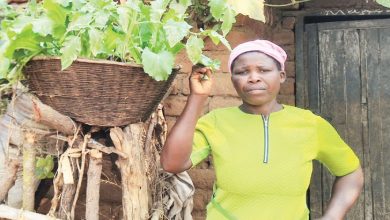
“We have never had enough,” says Martha Jere, 56, from Kauma. “Not during Muluzi, Bingu wa Mutharika, Joyce Banda, Peter Mutharika and certainly not now. Our children are minibus callboys or ganyu workers. We eat once a day.”
Strangely, Malawi has never lacked plans. From Vision 2020 to MW2063, from Millennium Development Goals to the Sustainable Development Goals, blueprints abound. But real and transformative change remains elusive.
Under Muluzi, the popular Starter-Pack Programme promised food security through free farm inputs.
Patrick Zamadenga, a senior citizen in Ntcheu, remembers: “We grew something, but had nowhere to sell or store it. We sold at a loss.”
After Muluzi, Bingu wa Mutharika introduced the Farm Input Subsidy Programme (Fisp) in 2005.
For a time, maize yields rose and Gross Domestic Product (GDP) growth hit 7.5 percent. But the benefits didn’t last.
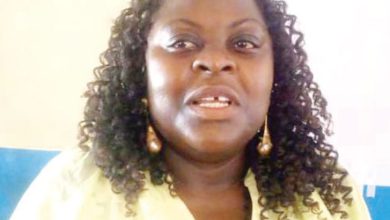
Economics Association of Malawi president Bertha Bangara-Chikadza said the initiative that has now metamorphosed into Affordable Inputs Programme (AIP)—since Joyce Banda’s one cow per family scheme ended bitterly for some—has always been counterproductive.
“It has always been expensive and unsustainable as it drains funding from education, health and roads,” she said.
Through the Joyce Banda initiative Zamadenga got a goat.
“I got a goat, not a cow. It died in weeks. No veterinary [official] came,” says Zamadenga.
Soon, Peter Mutharika repackaged Fisp and added the Malata and Cement subsidies, which critics say were poorly targeted and marred by corruption.
Today, under Chakwera, promises of one million jobs, mega farms and AIP continue, but GDP per capita lingers at $602 and inflation exceeds 30 percent.
Former Reserve Bank governor and UTM presidential hopeful Dalitso Kabambe believes the poverty crisis is structural rather than just political.
“Let’s be clear,” he says. “Poverty has deepened because we failed to align economic growth with population growth. We underinvested in human capital and ignored the private sector, which is the real engine of job creation.”
Kabambe points to a population that has more than doubled from nine million in 1994 to over 20 million today, while GDP growth has remained below 3 percent annually.
“That’s negative per capita growth. It means Malawians are poorer today in real terms,” he says.
Kabambe argues that the private sector has been crowded out by a borrowing-hungry government.
“Banks now earn over 50 percent of their profits from lending to the government, not to businesses. Interest rates over 25 percent are killing SMEs [small and medium enterprises],” he says.
Kabambe proposes structural reforms anchored in a K10 trillion National Investment Plan, featuring UTM’s flagship mega farms, each district receiving K100 billion annually with measurable targets.
These, he says, would be funded through pension-backed financing, diaspora bonds and partial privatisation of State enterprises.
For social protection, Kabambe proposes three pillars; a universal disability and elderly grant, a National Unemployment Insurance Scheme and job creation as the first line of defence.
“This isn’t campaign rhetoric. We must treat social protection as a productive investment,” he says.
Yet many Malawians are cautious. Dalitso Kubalasa, a renowned economist and policy expert, warns that the country keeps prioritising “programmes over people”.
“Most interventions are short-lived, externally driven and disconnected from real lives. Poverty isn’t just income – it’s also access, dignity and voice. Until we put citizens at the centre of policymaking and hold ourselves accountable, we’ll keep going in circles,” he says.
Kubalasa acknowledges that Malawi’s social protection efforts have offered short-term relief, but they risk deepening dependency.
“We’re not connecting social support to economic opportunity. If we don’t invest in livelihoods and market access, we’re building walls, not bridges,” he adds.
Kubalasa also critiques the obsession with GDP.
He adds: “Growth doesn’t mean much if it leaves people behind. Malawi’s growth is capital-heavy, urban-centred and blind to the informal sector where most people work. It’s growth by numbers not by transformation.”
What Malawi needs, he insists, is a radical shift in mindset: “We need to build the economy from the bottom up: invest in rural roads, public services, small-holder farmers and youth skills. Hoping for trickle-down isn’t a strategy. It’s an excuse.”
Meanwhile, the September 2025 elections offer no bold departure.
President Chakwera’s MCP is sticking with AIP and mega farms.
Kabambe’s UTM promises technocratic reform and district-level investment.
Former president Peter Mutharika’s DPP vows to restore “discipline and stability” while Joyce Banda’s PP is pushing for rural development and expanded social protection.
Kubalasa is unimpressed: “We’re seeing flashy political marketing, not real policy innovation. It’s more about alliances and headlines than lasting solutions. No party is presenting a coherent ideological alternative. That’s dangerous.”
He warns that if politics continues to chase short-term popularity, Malawi risks deeper stagnation.
Says Kubalasa: “We need leaders who think about the next generation, not just the next vote.”
Back in Ntandire, Mallick isn’t banking on any campaign.
“I can’t go back to my home village in Dedza. I can’t farm. Fertiliser is too expensive. And here, I survive on kindness, not policy,” he says.
From a distance, Mallick’s daughter, Litness, fries fritters under a smoky tin roof, flipping them in silence.
“They say things will get better,” he says softly, “but we’re still waiting”.